Cleaning method
10 effective ways to remove pet hair from your home.

The ten tools below are ranked on five things: how much hair comes off per pass, what the tool costs to run over a year, how many surfaces it covers, how long it takes to clean, and what happens when it wears out.
One of them is made by us. The other nine are named, linked, and ranked on the same five criteria — and where an independent lab rates one of them above ours for a specific job, this guide says so.
Forever Sticky
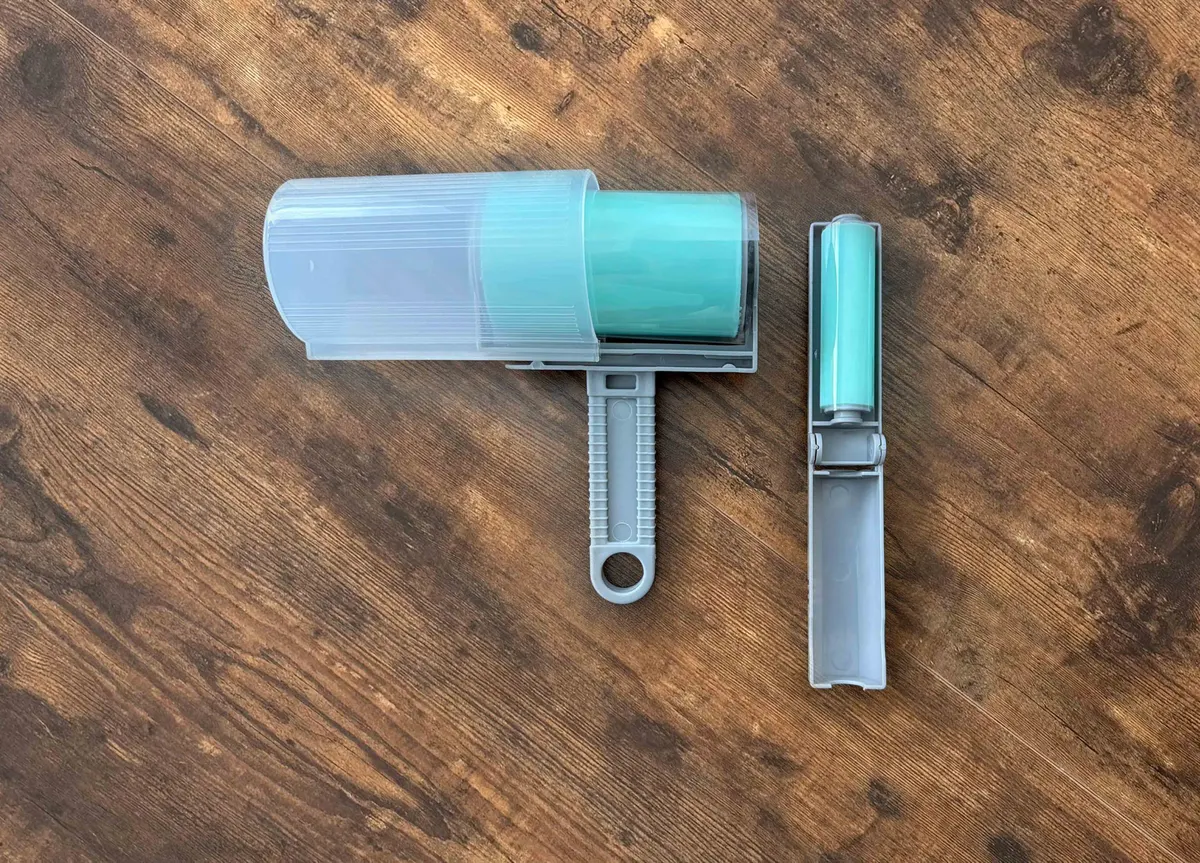
Forever Sticky Hand Rollers Set
The highest hair-removed-per-pass of anything here on fabric, and the only tool on this list with no running cost at all.
- Best for
- Sofas, mattresses, car seats, clothing, low-pile rugs, pet beds.
- Cost
- $44.95 for the two-roller set. $0/year after.
- Buy
- View product
The barrel is soft silicone rather than adhesive paper, so it grips fur and holds it rather than raking it around. Run it in short overlapping strokes, always in the same direction, and go back over the area once. Two passes clears a sofa cushion.
When the roller stops gripping it is loaded, not worn out. Rinse it under warm running water for about ten seconds, towel it dry, and it is ready again. That is the whole maintenance routine, and it is why the annual cost is zero.
Because silicone is waterproof, it also handles gritty messes that destroy an adhesive sheet — kitchen crumbs, litter tracked across tile, dry sand. It needs a dry surface to grip, so let anything damp dry first. It is covered by the Forever Guarantee: if it fails, your fault or ours, we replace it for as long as you own it, no receipt and no time limit, with $7.95 shipping per replacement.
Where it losesIt sits on the surface, so fur woven deep into high-pile carpet needs agitation first. Use it after a vacuum on thick carpet, not instead of one.
ChomChom
ChomChom Roller
The reusable roller Consumer Reports rated their top pick in a lab test of hand tools — a fair comparison, and tested on flat fabric; we have not run a head-to-head test against our rollers.
- Best for
- Sofa cushions, bedding, low-pile rugs, clothing laid flat.
- Cost
- Check the supplier for the current price; no refill sheets.
- Buy
- amazon.com
The ChomChom works by friction rather than tack: a fabric-covered head that you push and pull to sweep fur into an internal chamber, which you then pop open and empty. Consumer Reports found it left their test pillows "almost completely free of hair" after three back-and-forth swipes, and singled it out as the only tool in their test that collected everything it lifted.
It is an alternative for flat, dry cushions; we have not measured its performance against our rollers. It also needs no water, which is a real advantage if you want to keep one in a drawer and never think about maintenance.
Where it falls behind is range and grit. The head is rigid, so it skips over seams, curves and the pet itself; and because it is dry fabric, wet or sandy messes are off the table. There is also a chamber to empty every few passes rather than a rinse at the end of the job.
Where it losesOne class of surface — flat, dry fabric — done well, and nothing outside it. No wet use, no curves, no floors.
FURminator
FURminator deShedding Tool
The only method here that reduces the total volume of fur rather than moving it, which makes every other tool on this list work less hard.

- Best for
- Double-coated breeds during the spring and fall coat blow.
- Cost
- Price varies by product, plus ten minutes a day in season.
A deshedding tool reaches the loose undercoat that a surface brush skims over. On a heavy shedder in season, a ten-minute session outdoors pulls out fur that would otherwise spend the next week distributing itself across the house. The American Kennel Club recommends brushing several times a week during a coat blow, and matching the tool to the coat — an undercoat rake or deshedding edge for double coats, a slicker for long single coats.
The FURminator is the best-known version, but the category matters more than the brand: any well-made undercoat tool does this job. Work in the direction the hair grows, with light pressure, and stop before the skin pinks up.
Do it outside or over a hard floor. Deshedding indoors on carpet just relocates the problem.
Where it losesIt is prevention, not removal — it does nothing about the fur already on your sofa. And a sudden change in shedding, patchy loss or inflamed skin is a veterinary question, not a grooming one.
Roborock
A robot vacuum on a daily schedule
The tool that keeps floor fur from ever building up, by running while you are out rather than waiting for you to notice.

- Best for
- Hard floors and low-pile rugs across a whole house, every day.
- Cost
- Price varies by product, plus filters and an eventual battery.
- Buy
- roborock.com
Fur on floors is a volume problem, and the fix is frequency. A robot that runs every day never lets a drift accumulate in the first place, which is a different and easier job than clearing one that has.
The feature that matters for pets is the brush roll. Independent testing channels like Vacuum Wars and RTINGS score models specifically on flattened-hair pickup and on tangle — a rubber or dual-rubber brush releases long hair, while a bristle brush wraps it and you spend the saved time cutting fur off with scissors.
It is genuinely better than a sticky roller for one thing only: keeping large floor areas clear without your involvement. It does nothing for upholstery, clothing or the car.
Where it losesIt skips upholstery entirely, struggles on thick carpet, needs its bin and filter maintained, and gets stuck on cords and thresholds. It is floor upkeep, not a whole-house answer.
Dyson
A stick vacuum with an anti-tangle rubber brush roll
The right answer for deep, high-pile carpet, where fur is woven below the surface and has to be agitated loose before anything can collect it.

- Best for
- Thick carpet, stair runners, upholstery with a dedicated tool head.
- Cost
- Price varies by product up front, plus filters and an eventual battery.
- Buy
- dyson.com
This is a genuinely different class of tool, and it is high on the list for a reason a sticky roller cannot argue with: suction plus mechanical agitation reaches depths that surface tools do not. On high-pile carpet, nothing here comes close, and RTINGS rates this category above every handheld tool for that surface.
The anti-tangle brush design is the part worth paying for with a long-haired pet. A conical or rubber-finned brush bar sheds wrapped hair instead of collecting a felted ring you have to cut off.
It loses ground on upholstery, car seats and clothing, where suction skims across fur that is bound to the fibers rather than lying on them. That is the gap the first two entries fill.
Where it losesExpensive, loud enough to matter around a nervous animal, and it has real running costs — filters, batteries. It also cannot go over a jacket sleeve before you leave the house.
FURemover
A rubber-bristle broom for hard floors
Holds fine hair by static instead of pushing it around in a cloud, and it is the one floor tool that also works on a wet surface.

- Best for
- Tile, hardwood, low-pile rugs, entryways, garages, decks, patios.
- Cost
- Price varies by product one-time. $0/year after.
The stiff, widely spaced bristles of a conventional broom push a wave of air ahead of the sweep, and fur is light enough to ride it — so the hair scatters rather than moves. Soft, densely packed rubber bristles do the opposite: they flex against the floor, pick up a static charge, and fine hair clings to them instead of taking flight.
Rubber also works wet, which natural bristle does not do well and a vacuum must not do at all. Many rubber brooms put a squeegee edge on the head so the same tool covers a mopped floor or a hosed patio.
The FURemover is the cheap, widely stocked version of this idea and it works. A heavier build lasts longer and the head stays flat against the floor, but the mechanism is the same.
Where it losesIt gathers hair into a pile rather than capturing it, so you still need a dustpan. On deep carpet it is far less effective than a rubber-roller vacuum.
Washable covers and one designated shed zone
Containment rather than cleaning: it decides in advance which surfaces get fur, so the rest of the house stays out of the rotation.
- Best for
- Sofas, armchairs, car back seats, the foot of the bed.
- Cost
- Price varies by product for covers, plus one wash cycle a week.
A washable throw over the spot your pet already chooses is the highest-leverage change on this list per dollar spent. Fur lands on something you can put in a machine instead of something you have to clean by hand.
Pick tightly woven cotton or microfiber over loose knits and boucle. Loose weaves trap fur between the loops, and once it is in there no tool on this list gets it out cleanly.
Pair it with one rule the whole household follows — bedrooms closed, or one sofa allowed — and the daily cleaning load drops sharply.
Where it losesIt only works if the pet actually uses the covered spot. Cats in particular relocate to the one uncovered chair, and covers do nothing for fur already circulating on clothing and floors.
Bounce
A dryer cycle before the wash, with pet-hair dryer sheets
The single best laundry technique for pet hair, and it costs almost nothing but fifteen minutes.

- Best for
- Bedding, throws, clothing, pet beds with removable covers.
- Cost
- Dryer running costs, plus optional dryer sheets at the current supplier price.
Washing fur-covered fabric first is what makes pet hair so hard to get out of laundry. Water mats the fur into the fibers, and it comes out of the machine more embedded than it went in — and it clogs the drain filter.
Run the item on a 10-to-15-minute no-heat or low-heat tumble first. The dryer lint trap catches most of the loose fur. A pet-hair dryer sheet in that pre-tumble adds anti-static and helps release more; it is a small marginal gain on top of the technique, not a substitute for it.
Clean the lint trap between the pre-tumble and the wash, or the second load picks up what the first one shed.
Where it losesNot usable on anything that cannot go in a dryer, and it does nothing for fur already woven into a garment before you start.
Levoit
A HEPA air purifier
The only thing here that addresses fur and dander while they are still airborne, which is what actually matters if someone in the house is allergic.
- Best for
- Bedrooms, small rooms with poor airflow, allergy management.
- Cost
- Price varies by product, plus filter replacements once or twice a year.
- Buy
- levoit.com
Pet allergens ride on dander — skin flakes carrying proteins from saliva and skin glands — rather than on the hair itself, and dander is small enough to stay suspended for hours. No surface tool touches it while it is airborne. The American College of Allergy, Asthma and Immunology lists HEPA air cleaners and a HEPA or double-bagged vacuum among the measures that reduce exposure.
Size the unit to the room, run it continuously rather than in bursts, and put it where the allergic person sleeps. A purifier in an open-plan living space is doing much less than the label suggests.
Treat it as a complement to cleaning, not a substitute. It removes nothing from your sofa.
Where it losesIt removes nothing from any surface, has an ongoing filter cost, and is not a medical treatment. Persistent allergy symptoms are a conversation with a doctor.
A damp rubber glove or squeegee
The best free method, genuinely effective on upholstery, and worth knowing for the times you have no tool to hand.
- Best for
- A single cushion, a car seat in a pinch, one jacket before you leave.
- Cost
- Free.
A slightly damp rubber washing-up glove pulled across fabric generates enough friction and static to ball loose fur into clumps you can pick off. A window squeegee does the same across a car seat.
Damp, not wet. A soaked glove pushes fur into the weave, which is the opposite of what you want.
It works. The reason it is last rather than higher is throughput: it clears one cushion in the time a roller clears a sofa, and you stop every few strokes to pull the clumps off by hand.
Where it losesSlow, leaves fur balls to collect separately, and useless on hard floors. It is a stopgap, not a routine.
How the ten tools compare
| Tool | Best surface | Cost per year | Rinse or replace |
|---|---|---|---|
| Forever Sticky Hand Rollers | Upholstery, car, clothing | $0 | Rinse, 10 seconds |
| ChomChom Roller | Flat, dry fabric | $0 | Empty the chamber |
| FURminator deShedding Tool | The coat itself | $0 | Clear by hand |
| Robot vacuum | Whole-house floors | Filters, battery | Empty bin, wash filter |
| Stick vacuum (anti-tangle) | High-pile carpet | Filters, battery | Empty bin, wash filter |
| Rubber-bristle broom | Hard and wet floors | $0 | Rinse |
What to buy first if you are only buying one thing
Buy a silicone roller. It covers the largest number of surfaces in a typical home — sofa, bed, car, clothing, rug — and it needs no disposable refill sheets. If a lint-drawer tool that never needs water matters more to you than range, the ChomChom is the honest alternative.
Add a deshedding tool second if you have a double-coated dog, or a rubber broom second if your problem is mostly hard floors.
How we ranked these
Five criteria, applied in this order: hair actually removed per pass on the surface the tool is meant for, running cost over a year, how many surfaces it covers, how long it takes to clean the tool, and what happens when it fails.
That order is why the stick vacuum sits at five rather than one — it wins decisively on deep carpet and loses on the upholstery, clothing and car interiors where most household fur actually accumulates. It is also why the ChomChom sits directly below our own set: an independent lab rates it highly on flat fabric, so it earns a place in this comparison — it just does one surface where ours does many.
We make one of the ten. The other nine are ranked on the same criteria, they are named and linked so you can check them, and where a test operation rates one above us for a job, we have quoted it.
Sources
- Best pet hair remover tools (lab test; ChomChom top pick) — Consumer Reports
- Best robot vacuums for pet hair (test methodology and data) — RTINGS
- Best vacuums for pet hair — RTINGS
- How to deal with dog shedding — American Kennel Club
- Pet allergies: reducing exposure (HEPA filtration and vacuuming) — American College of Allergy, Asthma & Immunology
- Best Robot Vacuum for Pet Hair in 2026? (independent testing) — Vacuum Wars
Frequently asked questions
- What is the fastest way to remove pet hair from a couch?
- A tacky silicone roller in short overlapping strokes, working in one direction and going back over each area once. Consumer Reports rated the fabric-headed ChomChom Roller their top hand tool for flat cushions; a silicone roller reaches curves a rigid head skips and rinses clean instead of filling a chamber.
- What removes pet hair that a vacuum leaves behind?
- A sticky silicone roller or a fabric-headed reusable roller. Vacuum suction skims over fur that is bound to fabric fibers rather than lying loose on them, which is why upholstery and car seats still look furry after vacuuming.
- Does a robot vacuum get pet hair?
- On hard floors and low-pile rugs, yes — if it runs daily and has an anti-tangle rubber brush roll. Independent testers score models specifically on flattened-hair pickup and on whether long hair wraps the brush. It does nothing for upholstery or thick carpet.
- How do you get pet hair out of laundry?
- Tumble the item in the dryer on no or low heat for 10 to 15 minutes before washing it, then clean the lint trap and wash normally. Washing first mats the fur into the fibers and makes it much harder to remove.
- Does an air purifier remove pet hair?
- It removes airborne dander and some fine floating hair, which is what matters for allergies, but it does not remove anything from a surface. The ACAAI lists HEPA air cleaners among the measures that reduce pet-allergen exposure; pair it with a surface tool rather than treating it as a replacement.
