Cleaning method
5 ways to actually clean a mattress (and what washing sheets misses).

Humans shed skin continuously, and some of those flakes settle in bedding. We have not established a consensus daily cell count or weight suitable for this cleaning advice — estimates depend on what is measured, and none of them tell you how much ends up in a particular mattress.
Skin flakes feed house dust mites, which produce allergens such as Der p 1. In house dust that allergen is concentrated in mite droppings, but one analysis of the airborne particles carrying Der p 1 found it on fecal pellets, fibers and skin flakes — so "shed skin is the allergen in your bed" is the wrong way to say it.
These five methods are ranked on what they actually remove, not on how thorough they feel.
SafeRest
A zippered encasement under a washable pad
The only method here that prevents rather than remediates; the other four deal with what has already built up.
- Best for
- Every mattress. Most useful as part of a wider routine, not as a standalone allergy fix.
- Cost
- Varies by brand and size; replaced every few years.
- Buy
- saferest.com
A zippered encasement seals the whole mattress rather than covering the top. That is the distinction that matters: a fitted protector leaves the sides and underside open, and material migrates around it. Put a washable quilted pad on top — the pad takes the daily load and goes in the machine monthly; the encasement stays sealed and does the actual protecting.
For allergy management, look for a stated pore size (allergen-rated encasements from makers like SafeRest and Mission: Allergy publish one). Fabric marketed only as "waterproof" is solving a different problem.
Be honest about what the evidence supports. A Cochrane review of perennial allergic rhinitis found little benefit from mite-impermeable bedding used on its own. Separately, a 2017 randomized trial in mite-sensitized children who had just had an emergency asthma visit found fewer children returned to hospital over the next year with bedcovers (29.3% versus 41.5% among those assessed at 12 months) — but the same trial found no reduction in oral steroid courses. An encasement may be one part of an allergy-management plan; these results do not establish a benefit for every patient.
Where it losesAn encasement contains material already in the mattress; it does not remove it. Follow the mattress and cover care instructions, and do not rely on an encasement alone to control allergy symptoms.
Forever Sticky
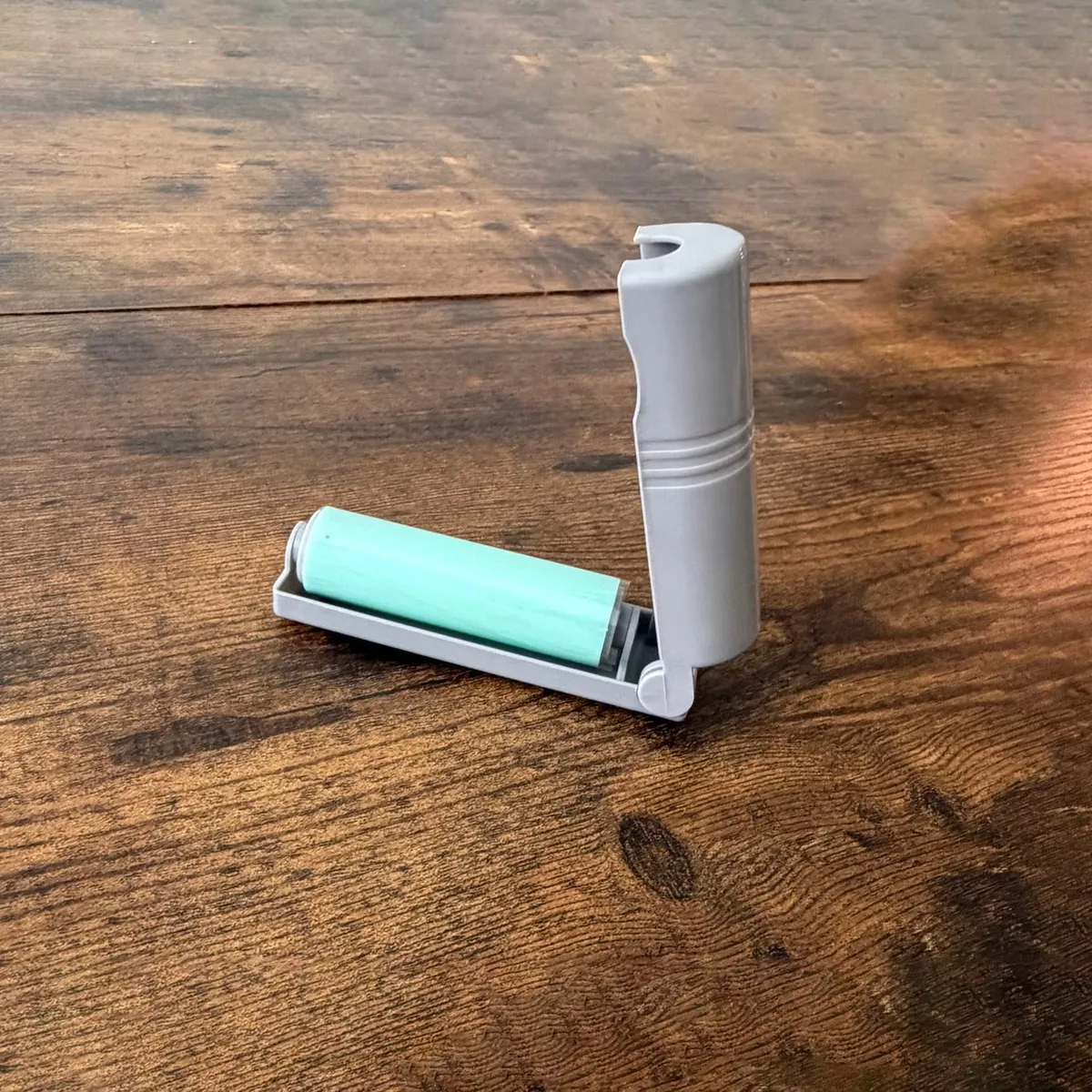
Forever Sticky Travel Hand Roller, at every linen change
A dry roller pass can collect loose surface debris during a linen change; time needed depends on the mattress and buildup.
- Best for
- Surface hair, lint, shed skin and pet fur on the mattress and pad.
- Cost
- $11.95 one-time, then nothing.
- Buy
- View product
At a linen change, use the exposed mattress surface as an opportunity to collect loose hair and lint. Follow the mattress care instructions.
A tacky silicone surface is the right tool here because a mattress cannot be beaten, shaken or put in a machine — anything that removes material has to lift it off the surface and hold it. The travel size lives in a bedside drawer, which is what makes the habit stick. Rinse it under the tap when it stops gripping; it is covered by the Forever Guarantee for as long as you own it.
Roll the pad and the encasement too, before they go back on. Both collect more than the mattress does.
Where it losesSurface only. It lifts what sits on the fabric and does not reach dust mite allergen worked into the top layer of foam or fill — that is the vacuum's job.
Miele or Dyson
A sealed HEPA vacuum, seasonally
A suitable upholstery attachment can collect dust from seams and fabric; this does not establish symptom improvement.
- Best for
- Dust mite allergen and fine debris worked into the top layer.
- Cost
- Uses a vacuum you already own, if it has a sealed HEPA system; filters have a replacement cost.
Vacuuming can disturb dust. Good filtration and a well-sealed machine help contain collected particles. The ACAAI recommends regular use of a high-efficiency vacuum cleaner to reduce allergen levels.
Use the upholstery attachment, work in overlapping passes, and give the seams and the piping around the edge extra time — that perimeter collects disproportionately.
Follow the mattress care instructions and discuss an appropriate allergy-control routine with a clinician.
Where it losesSlow, noisy, and its benefit is invisible, which is why almost nobody keeps it up. It also does nothing about the hair and lint on the surface that a roller clears in a fraction of the time.
Baking soda, left and vacuumed off
Genuinely useful for odor, routinely oversold as a cleaning method — it deodorizes and does very little else.
- Best for
- A musty mattress, or one that has been in storage.
- Cost
- A dollar or two of baking soda.
Sift a thin, even layer across the bare mattress, leave it for several hours, then vacuum it off thoroughly with the upholstery attachment.
Time does the work, not quantity. A thick layer is harder to remove completely and no more effective, and residue left in the fabric is a grit problem later.
It addresses odor. It does not remove hair, it does not remove allergen, and it does not clean a stain.
Where it losesFrequently presented as a complete mattress cleaning routine, which it is not. Skip it entirely unless there is an actual smell to deal with.
Sunlight and air
Free, mildly effective against moisture and mustiness, and impractical for the vast majority of households.
- Best for
- Small mattresses, futons, and anything that can physically be carried outside.
- Cost
- Free.
Mites take up moisture from the air. Keeping indoor relative humidity below about 50% can restrict their population growth, but it is not an instant survival cutoff — species, temperature and brief humid periods all matter. Airing bedding on its own is not proven to control the mite population.
The practical version for a full-size mattress: strip the bed and leave it bare with a window open for a few hours before remaking it. That captures most of the benefit without moving anything.
Do not leave a mattress in direct sun for a full day. Prolonged UV degrades foam and fabric.
Where it losesRemoves nothing physical — no hair, no lint, no allergen. It is a humidity measure, and it ranks last because it is the least actionable entry here for anyone with a normal bed in a normal house.
A routine that holds
What to do and when
- At every linen change: strip the bed, roll the bare mattress and both sides, roll the pad, remake.
- Monthly: wash the mattress pad and all bedding at the highest temperature the labels allow.
- Quarterly: vacuum the mattress with a sealed HEPA vacuum, paying extra attention to the seams and piping.
- Yearly: check the encasement for wear at the zip and corners, and replace it if the seal has gone.
- As needed: baking soda for odor only, and spot-treat stains with minimal moisture and a fan.
| Method | Removes | Frequency |
|---|---|---|
| Zippered encasement | Nothing — prevents | Once, replace every few years |
| Roller pass | Hair, lint, shed skin, fur | Every linen change |
| HEPA vacuum | Sub-surface allergen and dust | Quarterly |
| Baking soda | Odor only | As needed |
| Airing | Moisture only | Weekly if convenient |
How we ranked these
On what each method physically removes, how often you can realistically do it, and what it risks. Prevention ranks first because a sealed mattress never needs the other four.
Wet cleaning appears nowhere in the ranking because the failure mode — mildew inside foam that cannot be dried — is worse than the problem it treats. That is a case where the popular advice is simply wrong.
Sources
- House dust mite avoidance measures for perennial allergic rhinitis (systematic review) — Cochrane / PubMed
- Preventing severe asthma exacerbations in children: a randomized trial of mite-impermeable bedcovers — Am J Respir Crit Care Med (Murray et al., 2017)
- Mite allergen Der p 1 is not only carried on mite feces — J Allergy Clin Immunol
- Environmental assessment and exposure control of dust mites — Annals of Allergy, Asthma & Immunology
- Pillow & mattress encasings — allergy references — Mission: Allergy
Frequently asked questions
- How often should you clean a mattress?
- Roll the bare surface at every linen change, wash the mattress pad monthly, and vacuum the mattress with a sealed HEPA vacuum every three months. Monthly vacuuming if someone in the household has a diagnosed dust mite allergy.
- Can you steam clean or shampoo a mattress?
- It is best avoided. Foam and fill have no reliable way to dry, and trapped moisture leads to mildew inside the mattress, which cannot be reversed. Spot-treat with minimal moisture and force-dry with a fan instead.
- Does baking soda clean a mattress?
- It deodorizes. Sifted thinly, left for several hours and vacuumed off thoroughly, it addresses smell — but it does not remove hair, allergen or stains, and it is not a complete cleaning method.
- What is the difference between a mattress protector and a mattress pad?
- A zippered protector encases the mattress and seals it, including the sides and underside. A pad sits on top for comfort and washability. Use both: the pad takes the daily load and goes in the machine, the encasement stays sealed.
- Do mattress encasings help with allergies?
- A Cochrane review found isolated covers unlikely to help perennial allergic rhinitis. A 2017 randomized trial found fewer mite-sensitized children returned to hospital with an asthma exacerbation after receiving bedcovers following a recent emergency visit — but no reduction in oral steroid use. An encasement keeps the mattress cleaner; treat allergy symptoms with a doctor, not a cover alone.
- How do you get pet hair off a mattress?
- Use a tacky silicone roller across the bare mattress at a linen change, working in overlapping strokes, then roll the pad and encasement before they go back on. A mattress cannot be shaken or machine washed, so the hair has to be lifted off and held.

