Wellbeing
7 home-cleaning changes to consider when you have pet allergies.

The common assumption is that pet allergy means hair allergy, and it leads people to clean the wrong things. The reactive proteins come from skin, saliva and urine; dander is simply shed skin — the same thing as skin flakes, not a separate substance — and it matters because it carries those proteins. Dander particles are small and light enough to stay airborne for hours, and they settle on every soft surface in the room.
The ordering below is an editorial starting point for household tasks, not a measured comparison of allergen removal or symptom relief.
One genuinely pet-free room, and it should be the bedroom
Keeping pets out of the bedroom can reduce one source of exposure where you sleep.
- Best for
- Anyone with symptoms at all, and the first thing to try if symptoms disturb sleep.
- Cost
- Free — one closed door.
Keeping pets out can help limit what they bring into the bedroom. It does not make the room allergen-free; particles can arrive on clothing and remain in furnishings.
Closed door, always. Wash the bedding weekly at the hottest temperature the labels allow. Encase the mattress and pillows in zippered covers, which seals allergen that is already there.
Change out of clothes worn around the animals before getting into bed. Clothing is the main way allergen crosses the threshold of a room that is otherwise sealed.
Where it losesHard to enforce with an animal that has always had access, and it does nothing for the rest of the house. It also has no effect on allergen already embedded in that room's carpet and curtains before you started.
Levoit
Continuous HEPA filtration in that room
A suitable HEPA air cleaner can capture airborne particles; it does not clean settled dust.
- Best for
- The bedroom first, then whichever room the allergic person uses most.
- Cost
- Price varies by product, plus filter replacements once or twice a year.
- Buy
- levoit.com
Surface cleaning does not reach airborne particles. A correctly sized air cleaner can supplement cleaning, but particle capture does not guarantee symptom relief.
Size the unit to the room and run it constantly rather than in bursts — air exchange is a rate, and an hour of filtration does not undo a day of accumulation. One correctly sized unit in the bedroom beats an undersized one in an open-plan living space.
Change filters on schedule. A loaded HEPA filter drops airflow, and a unit moving less air filters less.
Where it losesIt leaves settled material in place, needs filter maintenance and does not replace an individual allergy-management plan.
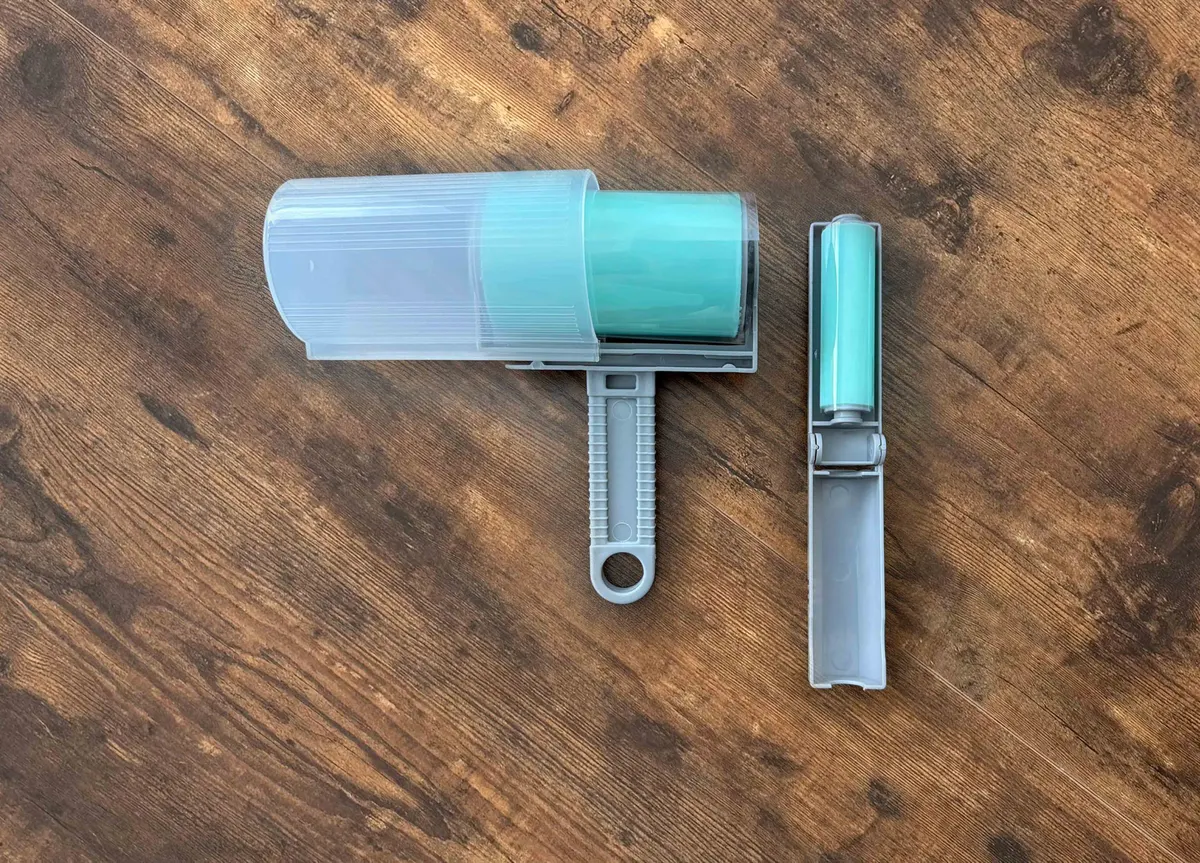
Forever Sticky
Removing hair and dander from soft surfaces, often
Soft furnishings are the reservoir that keeps re-releasing allergen into the air, so clearing them frequently is what makes filtration hold.
- Best for
- Sofas, chairs, bedding, throws, car seats, clothing.
- Cost
- $44.95 for a two-roller set, no refills.
- Buy
- View product
Hair and surface dust can carry allergens. Removing them is useful cleaning, but we have not measured allergen reduction from this roller or shown a clinical benefit.
Frequency beats intensity here. Short daily passes on the two or three surfaces the animal uses keep the reservoir small; a deep clean once a month lets it rebuild in between.
Rinse the tool under running water rather than shaking it out. Shaking a loaded tool over a bin returns dander to the room air, which is the specific thing you are trying to avoid.
Where it losesIt removes fur and surface dander, not the allergen already worked deep into upholstery foam or carpet backing. For those, filtration and washable covers do more.
Washable everything, washed weekly
Regular washing can remove allergens from washable bedding and covers.
- Best for
- Bedding, throws, cushion covers, pet beds, curtains where possible.
- Cost
- Price varies by product up front, plus weekly laundry.
Washing with detergent can remove allergens; hot water is not required for all allergen removal. Follow the fabric care label and wash bedding and covers regularly.
Choose a pet bed with a removable washable cover and clean it regularly according to the label.
Tumble fur-covered items on no heat for 10 to 15 minutes before washing. The lint trap catches the fur, and the wash then reaches the fabric rather than a mat of hair.
Where it losesOnly reaches what fits in a machine. Fixed upholstery, mattresses, rugs and curtains are the majority of soft surface area in most homes and none of it goes in the wash.
Hard flooring instead of carpet
The largest single reduction in allergen reservoir available, and the most expensive and disruptive entry on this list.
- Best for
- Bedrooms first, then living areas, when flooring is due for replacement anyway.
- Cost
- Flooring replacement, or free if you simply remove rugs.
Replacing wall-to-wall carpet with a hard floor is a standard allergist recommendation: carpet holds allergen in a way hard flooring does not, and releases it back into the air when walked on. Hard floors let you actually remove what settles on them.
You do not have to renovate to benefit. Removing rugs from the bedroom, or swapping a large rug for a washable one, captures a real share of the gain at no cost.
Sweep hard floors rather than dry-dusting them. A soft rubber-bristle broom holds fine hair by static instead of scattering it, and works on a damp floor.
Where it losesExpensive and disruptive, and hard floors show every hair, which means they need sweeping more often to look clean even though they hold less allergen.
Washing the animal, and washing your hands
Modest and short-lived on the animal, immediate and reliable on your hands.
- Best for
- Dogs that tolerate bathing; everyone, after handling any pet.
- Cost
- Free to $90 depending on who does the bathing.
Bathing reduces the dander an animal is carrying, but the effect fades within days, so it has to be regular to matter at all. Ask a vet what frequency the animal's skin will tolerate before committing to a schedule.
Washing your own hands after contact is the reliable half of this entry. Allergen transfers from hands to eyes and face, which is where most acute symptoms actually start.
Most cats should not be bathed. For cats, focus on the other six entries.
Where it losesOver-bathing damages skin and can increase dander, which is the opposite of the intent. There is no version of this that makes an animal hypoallergenic.
Miele or Dyson
A vacuum with a sealed HEPA system
Necessary if you have carpet, and actively harmful if the filtration is poor — this is the one entry where the wrong equipment makes things worse.
- Best for
- Carpeted homes, rugs, upholstery with deep pile.
- Cost
- Price varies by product, plus filters.
Vacuuming can disturb dust, and leakage or poor filtration can release particles. A sealed system with suitable filtration helps contain collected dust; symptoms during cleaning can have several causes.
Sealed matters as much as HEPA. A HEPA filter in a body that leaks at the seams lets unfiltered air bypass it entirely.
If cleaning triggers symptoms, have someone else vacuum when possible and discuss exposure precautions with an allergist.
Where it losesExpensive, and the benefit collapses if filters are not replaced on schedule. It also does very little on hard floors, where a sweep is faster and does not aerosolize anything.
Where the effort goes
| Change | Cost | Where it acts |
|---|---|---|
| Pet-free bedroom | Free | Bedroom exposure |
| HEPA filtration | Price varies by product + filters | Airborne dander |
| Frequent soft-surface passes | $44.95 once | Sofa, bedding, clothing |
| Regular washing | Laundry | Bedding, covers, pet beds |
| Hard flooring | High, or free (rugs out) | Floor reservoir |
| Sealed HEPA vacuum | Price varies by product | Carpet and deep pile |
Choose measures with your allergist based on your symptoms and home. This article does not establish that any combination is more effective than all the other measures together.
How we ranked these
We ordered these as practical household tasks, considering where people sleep and what can be cleaned. We have not measured comparative allergen removal, and the ranking does not establish clinical effectiveness.
Visible fur is only one part of cleaning. Airborne and settled allergens both matter, and fur-removal performance is not a substitute for clinical evidence.
Sources
- Pet allergies: symptoms, avoidance measures and treatment — American College of Allergy, Asthma & Immunology
- Pet allergy — diagnosis and treatment (bedroom, flooring, filtration) — Mayo Clinic
- Pet allergens — sources and how they spread — National Institute of Environmental Health Sciences
Frequently asked questions
- Are people allergic to pet hair or pet dander?
- Dander. The allergens are proteins found in shed skin, saliva and urine, and hair matters mainly as a carrier for them. This is why removing visible fur helps less than people expect and why airborne dander is the main exposure route.
- What is the most effective change for pet allergies at home?
- A pet-free bedroom is one option to discuss with an allergist, along with filtration and regular cleaning. There is no single intervention proven best for every person or home.
- Do air purifiers help with pet allergies?
- A HEPA cleaner can capture airborne particles. Evidence that filtration alone improves pet-allergic asthma symptoms is limited, so use it as a supplement to an agreed treatment plan, not a substitute.
- Can vacuuming make pet allergies worse?
- Yes, if the vacuum lacks sealed HEPA filtration. A poorly filtered vacuum lifts fine allergen out of carpet and exhausts it back into the room at head height, which is why symptoms often spike during and after vacuuming.
- Are any dog or cat breeds truly hypoallergenic?
- No breed is allergen-free. Some shed less hair, which reduces how much dander is distributed around a home, but they still produce the proteins that cause the reaction. Discuss individual tolerance with an allergist rather than relying on breed claims.
