Pet care
Seasonal shedding: 6 things that actually reduce the fur.

Seasonal shedding is driven by changes in daylight length rather than temperature, which is why indoor pets under artificial light often shed moderately all year instead of in two clean bursts.
A coat blow lasts two to four weeks. These six interventions are ranked by how much fur each one keeps off your furniture during that window.
FURminator
Deshedding the undercoat, outdoors, daily
The only intervention that removes fur before it enters the house, which makes it worth more than the other five combined during a coat blow.

- Best for
- Double-coated breeds — huskies, shepherds, retrievers, Maine Coons, Norwegians.
- Cost
- Price varies by product for the right tool, ten to fifteen minutes a day in season.
A surface brush glides over the topcoat and misses the undercoat entirely, which is the part being shed. An undercoat rake or deshedding edge reaches through the guard hairs to the loose fluff underneath. The American Kennel Club recommends matching the tool to the coat and brushing several times a week during a blow.
Fifteen minutes a day during a blow removes a genuinely startling volume of fur — often more per session than you will collect from the entire house in a week. The FURminator is the best-known tool; any well-made undercoat rake does the same job.
Do it outside, or on a hard floor you can sweep. Deshedding on carpet converts a solved problem into a harder one.
Where it losesOver-raking irritates skin, especially on thin-coated or sensitive animals. Stop when the tool stops filling. And this does nothing about fur already distributed through the house.
Forever Sticky
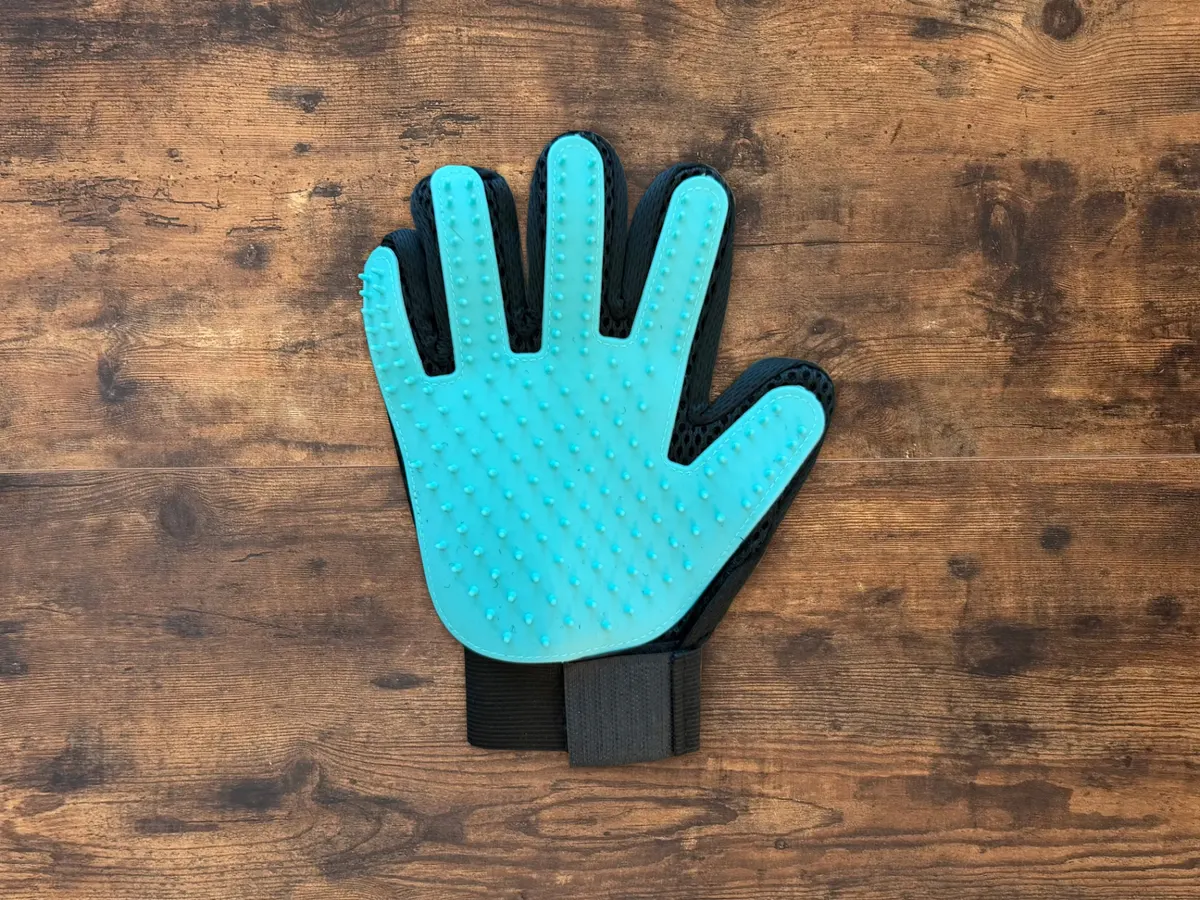
Forever Sticky Pet Mitt as the finishing pass
Collects the loosened fur a deshedding tool frees but leaves sitting in the coat — otherwise the fur that walks straight into the living room — and clears the sofa afterward.
- Best for
- Immediately after brushing, on pets that tolerate handling but not tools, and on the two or three surfaces they use.
- Cost
- $11.95, no refills.
- Buy
- View product
A rake loosens far more fur than it captures. Run a static-style grooming mitt over the coat straight afterward and you take a second harvest that would otherwise shake loose over the following hour indoors. The same mitt then clears the fur off the end of the sofa and the car seat — a daily two-minute pass on the spots that matter beats an hour at the weekend.
It is also the fallback for animals that will not tolerate a rake. A mitt reads to most cats and anxious dogs as being stroked rather than groomed. Pair it with a calm, low-pressure handling routine — the kind Kikopup demonstrates below — and grooming season stops being a fight.
Rinse it under warm water when it stops gripping, towel it dry, carry on. It is covered by the Forever Guarantee for as long as you own it.
Where it losesIt does not reach the undercoat on its own. On a heavy double coat it is a finishing tool, not a substitute for a rake, and fur woven into high-pile carpet still needs a vacuum.
Shark or Dyson
A vacuum with an anti-tangle brush roll, for the floors
The tool for the fur a coat blow drives down into carpet and rugs, where a surface tool cannot reach it.

- Best for
- Carpet, rugs, stair runners, and hard floors if the model handles both.
- Cost
- Price varies by product, plus filters and an eventual battery.
During a blow the volume of fur exceeds what a surface tool can keep up with on carpet, and a lot of it works below the pile where only suction plus agitation reaches it.
The feature that matters is the brush roll. Independent testers score models on flattened-hair pickup and on whether long hair wraps the brush — a rubber or anti-tangle design sheds wrapped hair instead of building a felted ring you cut off with scissors.
Run it every day or two during the blow, not weekly. Fur that never accumulates never has to be dug out.
Where it losesLoud enough to matter around a nervous animal in an already-stressful grooming season, and it does little on upholstery, where suction skims over bound fur.
Diet and coat condition
Real but slow, and worth checking rather than assuming — a coat responds to a diet change over months, not weeks.
- Best for
- Dull, dry or brittle coats, and animals shedding heavily outside season.
- Cost
- The difference between food tiers, plus any supplement.
Skin and coat are built from dietary protein and fat, and VCA Hospitals notes that a diet short on either shows up as a dull coat and increased shedding. Correcting it improves both — over a full coat cycle, not over a fortnight.
Omega-3 and omega-6 fatty acids are the components most often supplemented for coat condition. Whether your animal needs them depends on what it is already eating.
Ask your veterinarian before adding a supplement. Fat-soluble vitamins accumulate, and more is not better.
Where it losesSlow, and frequently oversold. A healthy animal on a complete diet will shed seasonally no matter what you feed it — the coat blow is normal, not a deficiency.
Washable covers on the two or three spots that matter
Converts a hand-cleaning job into a laundry job for the duration of the blow, then comes off when the season ends.
- Best for
- The end of the sofa, the chair, the foot of the bed.
- Cost
- Price varies by product, reusable every season.
A coat blow is temporary. A throw over the three surfaces the animal actually uses, for four weeks a year, is a much smaller commitment than redecorating around a pet.
Choose tight weaves. Fur pushed into boucle or loose knit during a heavy shed is effectively permanent.
Wash the covers with a dryer cycle first — 10 to 15 minutes on no heat before they go in the machine, so the lint trap catches the fur instead of the drain filter.
Where it losesDoes nothing for floors, clothing or the car, and only works on the surfaces the animal is actually choosing.
A bath and blow-dry before the blow
Loosens undercoat and can accelerate a shed that is going to happen anyway, which is useful timing rather than a reduction.
- Best for
- Dogs, at the start of a spring or fall blow.
- Cost
- A bath, or Price varies by product at a groomer for a high-velocity dry.
Warm water and a thorough dry loosen dead undercoat, and a professional high-velocity dryer forces out a substantial amount of it in one session. A deshedding shampoo and conditioner help release dead hair, though the AKC cautions that washing too often strips coat oils.
The benefit is compression: the shed happens over days in a controlled place instead of over weeks across your house.
Brush thoroughly once the coat is fully dry. Brushing a damp double coat mats it.
Where it losesOver-bathing worsens skin condition. Most cats should not be bathed at all, and most dogs do not need it more than every few months.
What the six do, side by side
| Intervention | Reduces total fur? | Effort |
|---|---|---|
| Deshedding outdoors | Yes | 10–15 min daily in season |
| Pet Mitt finish + surface passes | Yes / removes | 2 min after brushing |
| Anti-tangle vacuum | No — removes | Every day or two |
| Diet | Slightly, over months | None ongoing |
| Washable covers | No — contains | 1 wash/week |
| Bath and blow-dry | No — accelerates | Start of each blow |
How we ranked these
By how much fur each intervention keeps out of the house during a coat blow, then by effort and by risk of doing harm.
Deshedding ranks first by a wide margin because it is the only entry that acts before the fur is shed. The bath ranks last because it changes the timing of a shed rather than its size, and because it carries a real downside if overdone. We make one of the six — the mitt — and it is placed where the criteria put it, behind the deshedding tool we do not make.
Sources
- How to deal with dog shedding (brushing frequency, coat-matched tools, when to see a vet) — American Kennel Club
- Shedding in dogs (daylight trigger, diet and coat health) — VCA Animal Hospitals
- Best vacuums for pet hair (anti-tangle brush testing) — RTINGS
- The Calm Settle — teaching a dog to relax on cue — Kikopup
Frequently asked questions
- Why do dogs and cats shed more in spring and fall?
- Double-coated animals lose the winter undercoat in spring and shed the summer coat in fall to make room for a thicker one. The trigger is daylight length rather than temperature, which is why indoor pets under artificial light often shed moderately year-round instead.
- How long does seasonal shedding last?
- A coat blow typically runs two to four weeks. Daily deshedding shortens the period the fur is being distributed around your house, even though it does not change the total amount the animal sheds.
- What is the best tool for seasonal shedding?
- An undercoat rake or deshedding edge for double coats, used outdoors, followed by a grooming mitt to collect the fur the rake loosened but left in the coat. The AKC recommends matching the tool to the coat; a surface brush alone misses the undercoat, which is the part being shed.
- When is shedding a sign of a health problem?
- Patchy or symmetrical hair loss, bald spots, inflamed or flaky skin, excessive scratching, or a dramatic change outside the normal spring and fall pattern. Those point to allergies, parasites or endocrine conditions and warrant a veterinary appointment.
