Cleaning method
5 ways to get pet hair out of a car interior.

Automotive seat fabric is woven tighter and sits under more tension than household upholstery, and it spends its life building a static charge. Fur does not rest on it; it binds to it.
These five methods address different parts of the interior. The ordering is our suggested workflow, not a timed comparison test.
A brush can loosen trapped fur before a roller collects it from the surface.
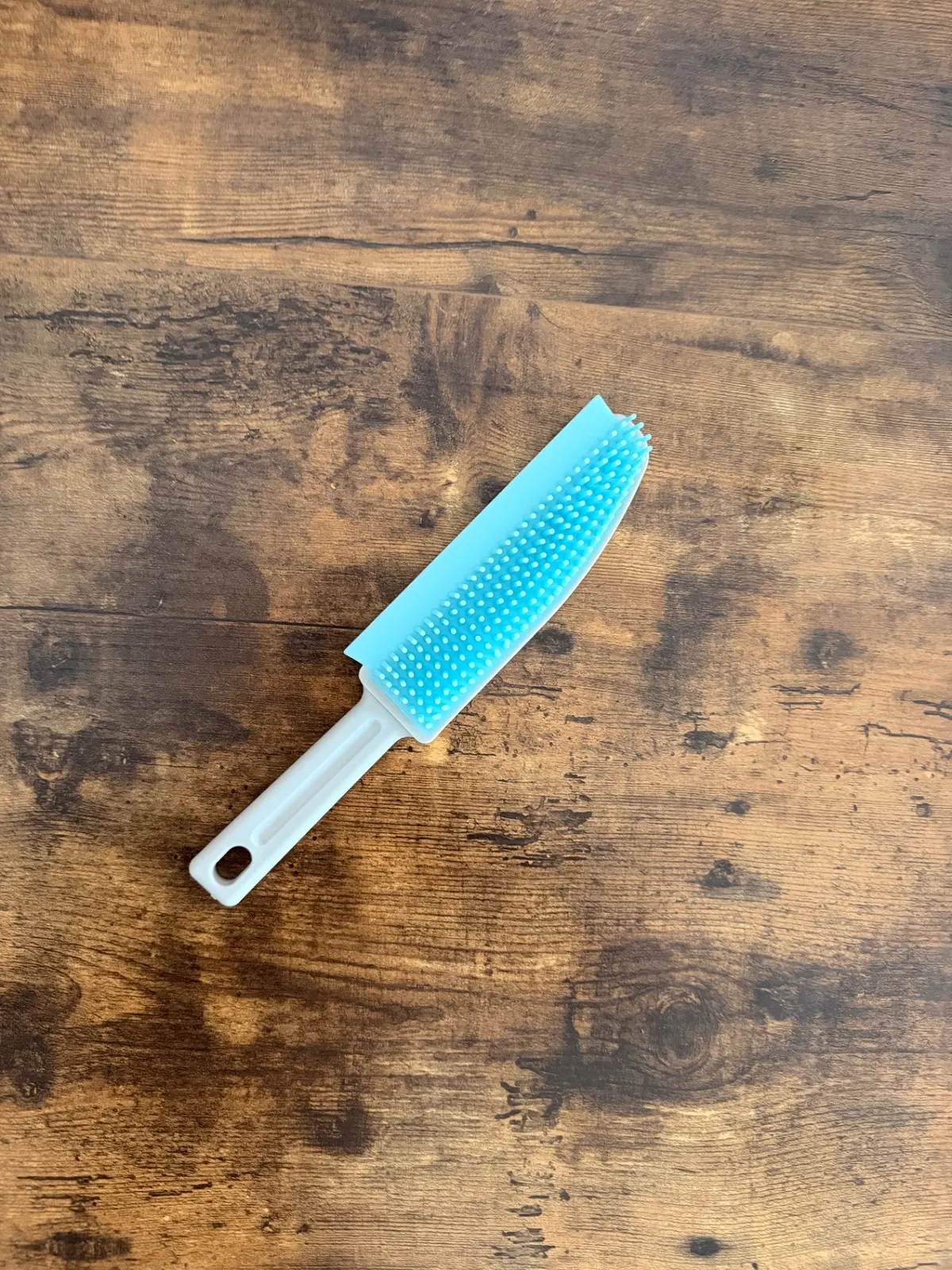
- Best for
- Fabric seats, headrests, floor mats, cargo areas, door cards.
- Cost
- $11.95 for the brush, plus any silicone roller.
- Buy
- View product
Work in one direction across a panel with the brush, using short strokes and enough pressure to flex the fabric. You are breaking the static bond and standing the fur up, not sweeping it anywhere.
Then take the roller over the same panel in overlapping strokes. The loosened fur now sits proud of the weave, where a tacky silicone surface can take all of it in one pass.
Do one panel at a time and finish it before moving on. Brushing the whole seat first just redistributes the fur you freed from the first panel onto the panels you already did.
Where it losesTwo tools and two passes. If you only want to carry one thing, carry the roller and accept that deeply bound fur will need a second go.
A travel-size roller kept in the glovebox
The method that keeps the car from getting bad in the first place, which is worth more than any single deep clean.
- Best for
- Between-trip upkeep, one seat after one dog ride, clothing before a meeting.
- Cost
- One-time purchase; silicone rollers need no refill sheets.
Keep a roller handy for a quick pass after the dog gets out, before loose fur accumulates. Ours is the Travel Hand Roller; any rinse-clean silicone roller does the same job.
Keep the roller covered and follow its storage instructions. We have not verified a safe hot-car storage temperature.
It also handles the things that arrive with the dog — sand, dry mud, grass seed, kibble crumbs — which an adhesive sheet either tears on or refuses to pick up.
Where it losesNarrow barrel, so it is slow across a whole bench seat. This is an upkeep tool, not the one you reach for before selling the car.
A rubber squeegee dragged across the seat
The best free method and genuinely effective on flat bench seats, which is why it is the one detailing trick worth knowing without buying anything.
- Best for
- Flat seat bases, cargo floors, a single panel with no tools to hand.
- Cost
- Free if you own a window squeegee.
Drag the blade toward you with firm pressure. Friction plus static balls the fur into rolls at the edge of the stroke, which you then pick up by hand or vacuum away.
It works best on flat, taut surfaces. The moment the panel curves — bolsters, seat backs, door cards — the blade loses contact and the method stops working.
A rubber washing-up glove does the same thing with more control on curved areas, if slower.
Where it losesLeaves fur balls behind that you have to collect separately, does nothing on carpeted floor mats with any pile, and cannot reach into seat seams at all.
A shop vacuum with a rubber crevice attachment
The right tool for the places fur hides rather than sits — seat rails, seam gutters, the gap between cushion and backrest.
- Best for
- Seams, rails, under-seat channels, footwell corners, floor mat pile.
- Cost
- Varies by model, plus filters.
This is a different class of tool, built for the geometry a roller cannot reach: much of the fur in a used car sits in gutters and channels rather than on open surfaces.
The attachment matters more than the suction. A rubber tip maintains contact and drags fur out; a hard plastic crevice tool rides over it.
Do this before the brush-and-roller pass, not after, or you will blow trapped fur back onto seats you have already cleared.
Where it losesPoor on open fabric panels, where suction skims across bound fur without lifting it. Bulky, needs power, and it is the most expensive entry here by a wide margin.
Compressed air to flush the hidden gaps
A finishing step rather than a cleaning method, used to move fur out of places nothing else reaches and into places you can collect it.
- Best for
- Vents, switch gaps, seat rails, trim seams, under the console.
- Cost
- Compressor access, or a can priced by the supplier.
Blow from the back of the cabin toward the open doors, working front to back is the mistake that sends everything into the footwells you just cleared.
Follow with a vacuum. Air moves fur but does not collect it, and disturbed dust can remain airborne.
This is the last step in a detail, never the first.
Where it losesRemoves nothing on its own, needs equipment, and blows dander into the air — worth a second thought if anyone in the household is allergic.
A panel-by-panel sequence
Order matters more than tools
- Remove the floor mats and set them aside — they are cleaned separately, outside the car.
- Vacuum the seams, rails and footwell corners first, before anything is loosened.
- Brush one seat panel at a time, short strokes, enough pressure to flex the fabric.
- Roll the same panel immediately in overlapping strokes, then move to the next panel.
- Beat and roll the floor mats outside the car, where the fur you free cannot resettle.
- Compressed air through the vents and trim gaps last, then a final vacuum pass.
How we ranked these
This is an editorial workflow based on access, tool shape and refill needs. We have not timed these methods or measured comparative removal rates.
We suggest the brush-and-roller pair for seat panels and the vacuum for seams and floor mats. The order is not evidence that a vacuum removes less hair per minute.
Frequently asked questions
- What is the best way to get dog hair out of a car?
- Brush the seat fabric first to break the static bond and stand the fur up, then lift it with a tacky silicone roller in overlapping strokes. Do one panel at a time, and vacuum the seams and rails before you start.
- Why does vacuuming not remove pet hair from car seats?
- Automotive fabric is woven tight and holds a static charge, so fur binds to the fibers rather than resting on them. Suction skims across bound fur, which is why the seat still looks furry after vacuuming.
- Does a squeegee remove pet hair from car seats?
- Yes, on flat taut panels. Drag the blade toward you with firm pressure and the fur balls into rolls at the edge of the stroke. It stops working on curved bolsters and seat backs where the blade loses contact.
- Should you use water to remove pet hair from a car?
- No. Water mats fur deeper into the weave, and moisture trapped in seat foam is a common cause of lasting odor. Work dry, and keep a rubber glove barely damp if you use one at all.

